Where Independent Agents Go for Independence
Our team is ready to get to work! We are committed and strive to deliver the best service for our producers each and every day. From facilitating the licensing process for producers, to initiating product quotes and illustrations for clients, and supporting producers throughout the client sale process, our team is prepared to service the various case requirements of our hard-working agents.
In addition to USI's experienced team of insurance industry professionals, we also develop and maintain key strategic partnerships with top-notch organizations whose expertise enables Underwriting Specialists to expand and deliver even more product solutions.
USI Team
Carriers
Partnerships
STRATEGIC AFFILIATIONS
MARKETING, SALES & TECHNOLOGY
SPECIALTY MARKETS

Advisory Board
| Ellis Management Ellis Family Business Partners | Gary Tannenbaum, Esq. The Tannenbaum Group |
| Thomas Holt, President Holt & Associates | David Vento, President Infinity Consultants |
Philanthropy





Principles of Ethical Market Conduct
Agents and Brokers principles of ethical market conduct Each insurance agent and broker subscribing to these principles commits themselves in all matters affecting the sale of individually sold life and annuity products:
I will conduct business according to high standards of honesty and fairness and render that my service to my clients which, in the same circumstances, I would apply to or demand for myself.
I will provide competent and customer-focused sales and service and will maintain a level of professional competence through a lifetime commitment to professional growth and continuing education.
I acknowledge the different constituents whom I serve: insurance companies and the wider insurance industry, my clients, my client’s advisors, my community, and my family - and I will ethically resolve any conflicts that might arise between those relationships.
I will communicate fully and effectively so that clients receive appropriate recommendations that balance the natural inclination to maximize benefits, tempered by their unique tolerance - or lack of tolerance - for risk.
I will deliver to my client a statement of business processes, methods of compensation, and other disclosures appropriate to an open and professional business relationship.
Life Insurance
TERM INSURANCE
Cost-effective risk management tool often used to cover liabilities such as income replacement, mortgage obligations, or key person coverage during critical financial periods.
Click to learn more about TERM INSURANCE
RETURN OF PREMIUM TERM
An attractive option for clients seeking both protection and a guaranteed refund if they outlive the term, effectively reducing the net cost of coverage. It may also appeal to risk-averse clients who value the forced savings component and prefer not to "lose" their premiums if no death benefit is paid.
Click to learn more about RETURN OF PREMIUM TERM INSURANCE
ENHANCED BENEFIT TERM
Allows access to a portion of the death benefit while still alive in the event of a qualifying critical, chronic, or terminal illness. providing liquidity during health crises, supporting income protection. (Click for link to PDF - Provided link not working).
Click to learn more about ENHANCED BENEFIT TERM
IUL (Indexed Universal Life)
Serves as a strategic tool for clients seeking tax-advantaged wealth accumulation, legacy planning, and supplemental retirement income.
GUL
Offers permanent coverage at a lower cost than traditional whole life policies. it’s an efficient solution for clients focused on estate planning, final expenses, or legacy goals with predictable premiums and minimal investment risk.
Click for Pac Life GUL
SINGLE PREMIUM LIFE
Offers a tax-advantaged way to transfer wealth, accelerate legacy planning, and potentially provide living benefits or access to cash value without ongoing funding commitments.
Click for Single Premium Life Information
JOINT/SURVIVOR LIFE
An effective tool for estate liquidity, wealth transfer, and charitable giving. Offering a cost-efficient strategy to help high-net-worth clients preserve assets, manage estate taxes, and ensure legacy planning objectives are met.
Click for SIUL Consumer Brochure
WHOLE LIFE
Whole life insurance from a mutual life insurance company offers guaranteed death benefit protection, fixed premiums, and the potential to earn dividends. Providing long-term financial stability, tax-advantaged cash accumulation.
Click for WHOLE LIFE PRODUCT COMPARISON
FINAL EXPENSE
Policies designed to cover end-of-life costs such as funeral expenses, medical bills, or small debts. Offering permanent coverage with simplified underwriting, making it accessible and affordable for older clients or those with health concerns.
Click for Final Expense Options Video
LINKED BENEFIT
A life insurance policy with living benefits provides the policyowner access to a portion of the death benefit while still alive in the event of a qualifying terminal, chronic, or critical illness. Providing an added layer of protection by delivering liquidity during health crises, reducing the need to draw from retirement assets or other savings.
Click for Accelerated Death Benefit Endorsement
BUSINESS SPECIALTY PLANS
Group: A single contract that provides life insurance coverage to a group of people, typically employees of a company, with simplified underwriting and lower premiums due to pooled risk. It serves as a valuable employee benefit, offering basic financial protection for beneficiaries while enhancing workplace retention and morale.
Bank Loan: These plans enable rapid underwriting—often issued within 24–48 hours using a simple one-page application and loan documentation—Protecting both clients and lenders by covering the full death or disability risk tied to the loan balance or payments
Annuities
MULTI-YEAR GUARANTEED
Consider a Multi-Year Guaranteed Annuity (MYGA) for clients seeking a predictable, fixed rate of return over a set period, especially in a low-risk portion of their portfolio. MYGAs can offer higher yields than CDs and help manage ?
Search-Compare Rates: Current MYGA Product Information
FLEXIBLE PREMIUM DEFERRED
A flexible premium deferred annuity allows clients to make multiple contributions over time, offering adaptability to changing financial situations. It also provides tax-deferred growth, making it a valuable tool for long-term retirement planning.
More: Flexible Premium Deferred Annuity
SINGLE PREMIUM IMMEDIATE ANNUITY
A SPIA can provide your clients with guaranteed lifetime income, helping to address longevity risk and create predictable cash flow in retirement. It also allows for efficient asset decumulation while potentially reducing sequence-of-returns risk in a client’s overall retirement strategy.
Search-Compare Rates: SPIA Comparison Tool
FIXED INDEXED ANNUITIES
GROWTH DESIGNED
An FIA offers the potential for market-linked growth without direct market risk, making it a compelling option for clients seeking asset growth with downside protection. It provides tax-deferred accumulation and can include a Cash Bonus. FIAs can help diversify a portfolio while preserving principal during volatile markets. This makes them attractive for conservative growth-oriented strategies, especially nearing or in retirement.
Product Information: FIA Growth Product Information
INCOME DESIGNED
A Fixed Indexed Annuity (FIA) with a lifetime income rider can provide your clients with market-linked growth potential while protecting their principal from losses. It offers guaranteed lifetime income, helping address longevity risk—a top concern for many retirees. This solution can complement other retirement income sources and provide predictability in uncertain markets. It also allows clients to maintain some control over their assets, unlike traditional pension plans.
Product Information: Income FIA Information
OTHER HELPFUL ANNUITY LINKS
Concept Calculators:
Annuity Marketing Resources:
Product Specific Training Links:
Long Term Care
TRADITIONAL LTC
Traditional long-term care insurance provides dedicated coverage for extended care needs, helping clients protect their assets from being depleted by high healthcare costs. It offers flexibility in care settings, including at home, assisted living, or nursing facilities. Premiums are often lower than hybrid options when purchased at younger ages, and policies may qualify for state partnership programs that offer Medicaid asset protection. This solution can play a key role in preserving a client's retirement portfolio and financial legacy.
HYBRID-LINKED BENEFIT LONG TERM CARE OPTIONS
A life insurance policy with long-term care benefits offers dual protection—providing a death benefit to beneficiaries and access to funds for long-term care if needed. This helps clients preserve their assets while ensuring care costs don’t erode their legacy. Premiums are often guaranteed, and benefits are typically income tax-free, offering predictable planning advantages. It’s a flexible, efficient solution for clients concerned about both longevity and leaving a financial legacy.
Hybrid Life with LTC Product Information
FIXED ANNUITY WITH LONG TERM CARE
A linked fixed annuity with long-term care benefits provides coverage for future health needs. It allows clients to leverage their retirement assets efficiently by doubling or tripling income if long-term care is needed, without requiring separate insurance. The fixed annuity base ensures principal protection and steady growth, even in volatile markets. This solution helps financial advisors offer clients peace of mind and a streamlined approach to managing two major retirement risks: longevity and healthcare costs.
Fixed Annuity with LTC Information
OTHER LTC RESOURCES
Request a Quote: Click for PDF Form
Kiplinger – expert-guide-to-planning-for-long-term-care
Medicare.gov – Long-Term Care Coverage: Clarifies what Medicare does and does not cover: www.medicare.gov/long-term-care
Disability Income
According to the American Council of Life Insurers, one-third of all Americans between the ages of 35 and 65 will face a disability of at least 90 days. Disability planning is a key component of any sound financial and risk management plan.
Individual
Disability insurance helps protect a client’s income—their most valuable asset—ensuring financial stability if they’re unable to work due to illness or injury. As a financial advisor, it supports your holistic planning by safeguarding against a major risk to long-term wealth accumulation.
Product Comparison Information: Disability Product Comparison.pdf
White Collar Executive/Professionals
Executives and high earning professionals need individual disability income insurance because group coverage often caps benefits, replacing only a portion of their income—typically up to 60% and with dollar limits. This creates an income gap that individual policies can fill. Individual policies offer higher, tax-free benefits and greater customization, ensuring better financial protection.
Disability Fact Finder: Disability Insurance Fact Finder
Disability Sales & Marketing Information: Disability Insurance Education
Business Owner Needs
Business Overhead
A small business owner may want business overhead disability insurance to cover essential operating expenses - like rent, utilities, and employee salaries - if they become disabled and can't work. This helps keep the business running during their recovery.
Disability Buy-Out
Business owners may want disability buy-out insurance to cover ongoing expenses if they become disabled and to ensure a smooth transfer of ownership. This protects the business’s operations and financial stability during unforeseen events.
Key Person
Small business owners may want Key Person disability insurance to cover essential expenses or replace lost income if they or a key employee becomes disabled, ensuring the business can continue operating. This protects against financial strain and helps maintain stability during recovery.
Term Quote
Text here
Winflex Web
Content here
Agent Tools
MYGA Rates
A MYGA, or Multi-Year Guaranteed Annuity, is a low-risk insurance product that acts like a CD by offering a fixed interest rate for a specific period (e.g., 3-10 years), providing predictable, tax-deferred growth for your money, ideal for near-retirees seeking guaranteed returns without market risk. You deposit a lump sum, earn a guaranteed rate, and at maturity, can withdraw, renew, or roll over funds, with taxes only paid on earnings when withdrawn.
Click to access our MYGA Quote Engine
Term Made EASY
P&C Agent/Agency Designed
- Instant Decisions up to 2M available
- Option to have insured quote & submit WITHOUT agent assistance
- Full Compensation
- Digital Marketing Promotion “Kits” available
Lead Generation
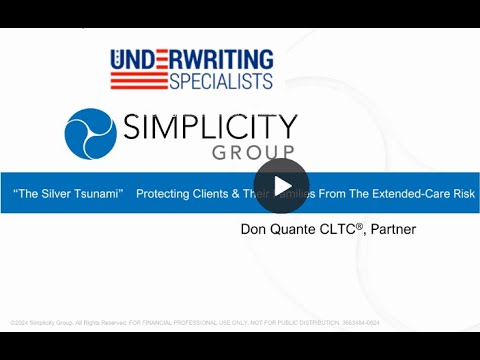
Kai-Zen: Premium Financing
Kai-Zen as a premium finance strategy for high-income individuals that uses a life insurance policy and a bank loan to amplify retirement income.
Click Here to learn more about this program to build your business.

Tax Free Retirement Concepts
Tax-Free Retirement Plans
Permanent Life Insurance (Section 7702 Plans/TFRAs): life insurance policies can build cash value that can be accessed as tax-free income through policy loans in retirement. These have no contribution limits and are not subject to RMDs.
The Kai-Zen System: a specific type of financed indexed universal life (IUL) insurance plan that uses leverage to help income earners accumulate more wealth for retirement.
How it Works: The plan uses bank financing to supercharge contributions to a cash-accumulating life insurance policy. The participant (or their employer) makes contributions for the first 5 years, while a bank finances the majority of the premiums (often a 3:1 leverage ratio). The life insurance policy itself serves as the sole collateral for the commercial loan, which means participants typically do not need to sign loan documents or provide personal guarantees.
Benefits: The goal is to build a larger cash value faster than could be done through self-funding alone. This cash value grows tax-deferred, has a 0% floor to protect against market losses, and can provide a stream of tax-free income during retirement through policy loans. It also includes a death benefit and living benefit riders for critical/chronic illness.
Target Audience: It's designed for higher income earners who may have already maxed out traditional retirement plans (like 401ks and IRAs) and are looking for additional tax-advantaged savings options.
- Roth IRA: an individual retirement account funded with after-tax dollars.
- Contributions & Withdrawals: Contributions can be withdrawn anytime, for any reason, without taxes or penalties. Qualified withdrawals of earnings (after age 59½ and meeting the five-year rule) are entirely tax-free.
- Limits & Rules: It has annual contribution limits of $7,500 for individuals under age 50, and an increased contribution limit of $8,600 for individuals over age 50. Roth IRAs also have no required minimum distributions (RMDs) during the original owner's lifetime.
- Roth 401(k): This option is offered through an employer's retirement plan.
- Contributions & Withdrawals: Contributions are made with after-tax money, and qualified withdrawals are tax-free.
- Limits & Rules: It has annual contribution limits of $7,500 in 2026, plus a $1,100 catch-up for ages 50-59 totaling $8,600, and an additional super catch-up of $11,250 for ages 60-63, for a total of $35,750. Unlike a Roth IRA, has no income limits for contributions. Roth 401(k) accounts generally are subject to RMDs, but these can often be rolled into a Roth IRA to avoid them.
Other Sources of Tax-Free Retirement Income
Health Savings Account (HSA): Contributions are tax-deductible, the money grows tax-free, and withdrawals are tax-free if used for qualified medical expenses. After age 65, funds can be withdrawn for any purpose (subject to ordinary income tax, but no penalty), making it a versatile retirement savings tool.
Municipal Bonds: Interest earned from municipal bonds is generally exempt from federal income taxes and potentially state and local taxes if issued by your home state.
Tax Advantaged Retirement Concepts
Individual Retirement Account (IRA)
An IRA is a personal savings plan that provides tax advantages for setting aside money for retirement.
Types of IRAs:
- Traditional IRA: Contributions may be fully or partially tax-deductible in the current year, and the money grows tax-deferred. Withdrawals in retirement are taxed as ordinary income.
- Roth IRA: Contributions are made with after-tax dollars and are not deductible. Qualified withdrawals of contributions and earnings in retirement are entirely tax-free.
- SEP IRA & SIMPLE IRA: These are employer-sponsored plans for small businesses and self-employed individuals, allowing for employer and/or employee contributions with tax advantages.
Key Features:
- Contribution Limits: For 2026, you can contribute up to $7,500 across all your Traditional and Roth IRAs, or $8,600 if you are age 50 or older.
- Withdrawals: Generally, withdrawals before age 59½ may be subject to a 10% penalty in addition to any applicable income tax.
- Required Minimum Distributions (RMDs): RMDs from traditional, SEP, and SIMPLE IRAs generally must begin at age 73, though Roth IRAs have no RMDs for the original owner.
- You can set up an IRA with most banks, brokerage firms, or life insurance companies.
401(k) and 403(b) plan:
- Tax Advantages: Both offer traditional (pre-tax contributions and tax-deferred growth) and Roth (after-tax contributions and tax-free withdrawals in retirement) options.
- Contribution Limits: The IRS sets the maximum total contribution limits for both plan types. For 2026, the limit is $24,500 for ages under 50. Contribution maximum for ages 50-59 is 32,500. Super catch-up for ages 60-63 is $35,750.
- Withdrawal Rules: Withdrawals before age 59½ typically incur a 10% penalty plus income taxes, with some exceptions for qualifying hardships or job separation after a certain age.
- Portability: When you leave an employer, funds can generally be rolled over into an IRA or a new employer's plan.
Defined Benefit Plans
A defined benefit (DB) plan is an employer-sponsored retirement plan, also known as a traditional pension, that provides a guaranteed, fixed monthly or lump-sum payment in retirement. The benefit is calculated using a formula based on factors like an employee's salary, years of service, and age at retirement.
Types of defined benefit plans
Traditional defined benefit plans: The most common type of plan, where benefits are determined by a formula based on salary, service, and age.
• Traditional defined benefit plans: The most common type of plan, where benefits are determined by a formula based on salary, service, and age.
• Cash balance plans: A hybrid plan that looks like a defined contribution plan to the employee, but is still a DB plan from the employer's perspective. Benefits are expressed as a stated account balance, but the employer is responsible for funding it.
Key features
• Guaranteed benefit: Provides a predictable, fixed retirement income for life.
• Employer-funded: The employer is responsible for funding the plan and managing the investments.
• Benefit formula: Retirement payments are determined by a formula, often incorporating final average salary and years of service.
• Risk: The employer, not the employee, assumes the investment risk.
• Insurance: Many private-sector DB plans are insured by the PBGC to protect against employer insolvency.
• Vesting: Employees must meet certain criteria, such as age and years of service, to become eligible for benefits.
Profit Sharing Plans: A profit-sharing plan is a retirement plan where an employer contributes a portion of the company's profits to employees' individual accounts. The employer determines the contribution amount each year, which can be a flexible and discretionary decision. Contributions can be given as cash, deferred to a retirement account, or used to purchase company stock, and the funds can be allocated to employees based on formulas like their compensation or age.
How it works
• Employer contributions: Employers decide each year whether to contribute and how much, with no legal requirement to contribute if profits are low or nonexistent. Contributions are tax-deductible for the employer.
• Employee accounts: Contributions are deposited into separate accounts for each eligible employee.
• Vesting: Employees have a vesting schedule, meaning they earn the right to keep the contributions over time.
• Distribution: Employees can access the funds after age 59½, when they are taxed as ordinary income. Some plans may allow for early withdrawals, though this is less common.
Types of profit-sharing plans
• Cash plans: Employees receive direct cash payments.
• Deferred plans: Contributions go into a retirement account, and employees access the funds later, often at retirement. These are also known as Defined Contribution plans.
• Combination plans: A mix of cash and deferred plans.
• Employee Stock Ownership Plans (ESOPs): Employees receive shares of company stock instead of cash.
Advanced Planning Concepts
IRREVOCABLE LIFE INSURANCE TRUSTS
An (ILIT) is a sophisticated estate planning tool designed to own a life insurance policy and remove its proceeds from the insured's taxable estate. The primary purpose is to preserve wealth for beneficiaries by minimizing federal and state estate taxes, which can be significant for larger estates. Key Benefits
- Estate Tax Reduction: The main advantage is that the life insurance death benefit is excluded from the grantor's gross estate, potentially saving substantial amounts in estate taxes.
- Liquidity for the Estate: The ILIT can provide immediate cash to the estate (by purchasing illiquid assets like real estate or a family business from the estate, or by making a loan to the estate) to pay taxes, debts, and other expenses without forcing a sale of major assets.
- Asset Protection: Assets held within an ILIT are generally protected from the grantor's and beneficiaries' creditors.
- Controlled Distributions: The grantor can specify exactly how and when beneficiaries receive funds, which is useful for minors, individuals with special needs, or those who may not manage a large lump sum wisely.
- Probate Avoidance: Assets in the trust bypass the public probate process, ensuring privacy and potentially faster access to funds for beneficiaries.
LIFE INSURANCE RETIREMEN PLAN (LIRP)
A LIRP is a strategy using a permanent life insurance policy's cash value to build supplemental, tax-advantaged retirement income alongside traditional retirement accounts. It is not a formal retirement account itself, but a financial tool best suited for specific individuals, primarily high-income earners LIRPs use a permanent life insurance policy (such as whole life, universal life, or variable universal life) that accumulates a cash value over time.
- Premiums are paid with after-tax dollars.
- A portion of the premium covers the cost of the life insurance and related fees, while the excess goes into a cash value account that grows tax-deferred. To maximize retirement savings potential, policies are often "overfunded" (within IRS limits to avoid becoming a Modified Endowment Contract or MEC) to grow the cash value faster.
- The cash value can be accessed in retirement through tax-free withdrawals of the principal (your contributions) and tax-free policy loans.
- A death benefit is paid to beneficiaries tax-free upon the policyholder's death, though any outstanding loans will reduce this amount.
PREMIUM FINANCING
Life insurance premium financing is a strategy where a third-party lender provides a loan to cover the premiums for a life insurance policy. This allows high-net-worth individuals to secure a large policy without liquidating their assets, as the loan is secured by the policy's cash value and potentially other collateral. The borrower pays the loan's interest, and the strategy aims to benefit from investment returns that are higher than the loan interest rate.
How it works
- Loan for premiums: A third party, such as a bank or specialized finance company, lends money to cover a significant portion, or all, of the life insurance policy premiums.
- Collateral: The life insurance policy is assigned to the lender as collateral for the loan.
- Interest payments: The borrower is responsible for paying the annual interest on the loan. The loan may also be structured so the interest is capitalized, meaning it's added to the loan balance and accrues, which impacts the policy's cash value and death benefit.
- Loan term: The loan can last for a set period, such as five to fifteen years, or for the life of the policy.
- Repayment: At the end of the term, the borrower can pay off the loan, refinance it, or continue paying premiums directly.
CHARITABLE REMAINDER ANNUITY TRUSTS
A CRAT is an irrevocable trust where you donate appreciated assets, receive a fixed annual income for life or a term (up to 20 years), get an immediate tax deduction, and the remaining assets go to charity, offering tax benefits and a reliable income stream but with no potential for increased payments if investments boom. Key features include a one-time contribution, a fixed dollar payout (5%-50% of initial value), and complex rules requiring expert guidance, making it ideal for highly appreciated assets like stocks or real estate to avoid immediate capital gains taxes.
How a CRAT Works
- Fund the Trust: You transfer assets (e.g., stocks, real estate) into the CRAT.
- Tax-Free Sale: The trust sells these assets without paying immediate capital gains tax, reinvesting the full proceeds.
- Receive Income: You (or other beneficiaries) get a fixed dollar amount each year, determined at the start (at least 5% of the initial value).
- Charitable Remainder: After the term ends (lifetime or 20 years), the remaining assets go to your chosen charity.
Key Benefits
- Income Stream: Provides a predictable, fixed income.
- Tax Deduction: Earns an immediate income tax deduction.
- Capital Gains Avoidance: Sells assets tax-free, reinvesting more capital.
- Asset Diversification: Allows for diversification within the tax-exempt trust.
PRIVATE FAMILY FOUNDATIONS
This is an ideal mechanism for selling appreciated property and/or creating significant cash flow, while simultaneously creating a legacy.
- Property - Stocks, Collections, Real Estate, Business Ownership
- Tax advantages - Avoid Capital Gains, and secure instant tax deduction
- Family Foundation is funded by invested portion of Trust
- Family or Donor's appointees sit on Board of Family Foundation
- Donor receives entire value of gift property over 5, 7 or 10 years through a stream of annuity payments
- Donor's family receives entire value of gift property from Wealth Replacement Trust funded by Annuity payments
CONSERVATION EASEMENTS & LAND TRUSTS
In essence, uses legal tools (easements) and financial strategies (tax benefits, endowments) to permanently conserve land while providing significant financial advantages to landowners and ensuring long-term protection via robust land trust stewardship. Involves landowners strategically reducing taxable income, estate, and property taxes by donating land use rights to a Land Trust, receiving significant federal/state tax deductions, potentially cash payments (like USDA ACEP), and ensuring perpetual land preservation, requiring careful appraisal, due diligence, and stewardship funding for the land trust to manage the easement long-term. The net effect to an owner is tax advantages, enhanced cash flow and reducing estate tax bills. This is an especially valuable tool when the intent is to preserve the club for the next generation.
Business Owner Planning Needs
BUY-SELL AGREEMENT FUNDING
A buy/sell agreement, also known as a buyout agreement, is a contract funded by a life insurance policy that can help minimize the turmoil caused by the sudden departure, disability or death of a business owner or partner. A buy/sell agreement gives employers peace of mind knowing that their business is in capable hands should they no longer be able or want to manage it.
It also can:
- Provide money to create a fair market value exchange Promotes equitable and orderly transfer of wealth, ownership and management
- Offer tax advantages
- Guarantee heirs a buyer for assets they may not know how to manage
- Provide heirs cash to pay estate debt, expenses and taxes
KEY-PERSON COVERAGE
Replacing a key person takes time and money − and could cost the business valuable clients during the transition. Key person life insurance offers a death benefit that can help cover financial losses that occur at the death of a key person. This helps assure continuity of the business for employees, customers and creditors. Establishing and maintaining a key person policy on your top employees also affirms their value to your business, strengthening the relationship.
Uses can be any of the following:
- The death benefit can be used to recruit and develop a replacement for the previous key employee
- Coverage is a business asset that enhances your company’s creditworthiness for commercial borrowing
- The policy’s cash value may be available to your business through a withdrawal or loan if needed
EXECUTIVE COMPENSATION & RETENTION
Companies use life Insurance as a way to reward and retain key executives. Because these plans are non-qualified, they can be offered selectively to key executives, whose contributions to the company's qualified plan, such as a 401(k), are limited by the maximum annual contributions or the income eligibility limits, or both.
Typically, the company and the executive sign an agreement that promises the executive a certain amount of supplemental retirement income based on various eligibility conditions that the executive must meet. The company funds the plan out of its current cash flows or through the funding of a cash-value life insurance policy. The money, and the taxes on it, are deferred. After retiring, the executive can withdraw the money and must pay state and federal taxes on it as ordinary income.
eMoney Advisor
eMoney Advisor excels in comprehensive planning solutions that adapt to simple or complex needs - enabling right-sized planning conversations across your business.
Click Here to learn more about this program to build your business.
Biz Equity
Business valuation software that provides an accurate, real-time assessment of business value in seven streamlined steps. A platform purpose built to help financial professionals better serve their business owner clients. With it, you help drive better decision-making, provide a more comprehensive understanding of their full financial picture, and foster stronger client relationships in the process.
Life Settlements
A Life Settlement is a transaction that enables qualified life insurance policy owners to receive a cash advance on their life insurance coverage by selling it to a state-licensed financial institution called a life settlement provider. The price paid for the life insurance policy represents the net present value of the policy which is discounted from the face amount and calculated by considering future premium expenses, the health prognosis of the insured, as well as other risk factors.

Blog
Contact
- 1400 North Providence Road, Media, PA, USA
- Rosetree Building 2, Suite 3007
- +1-215-540-4470
- info@undspec.com
- Mon-Fri: 08:30AM - 5:00PM